
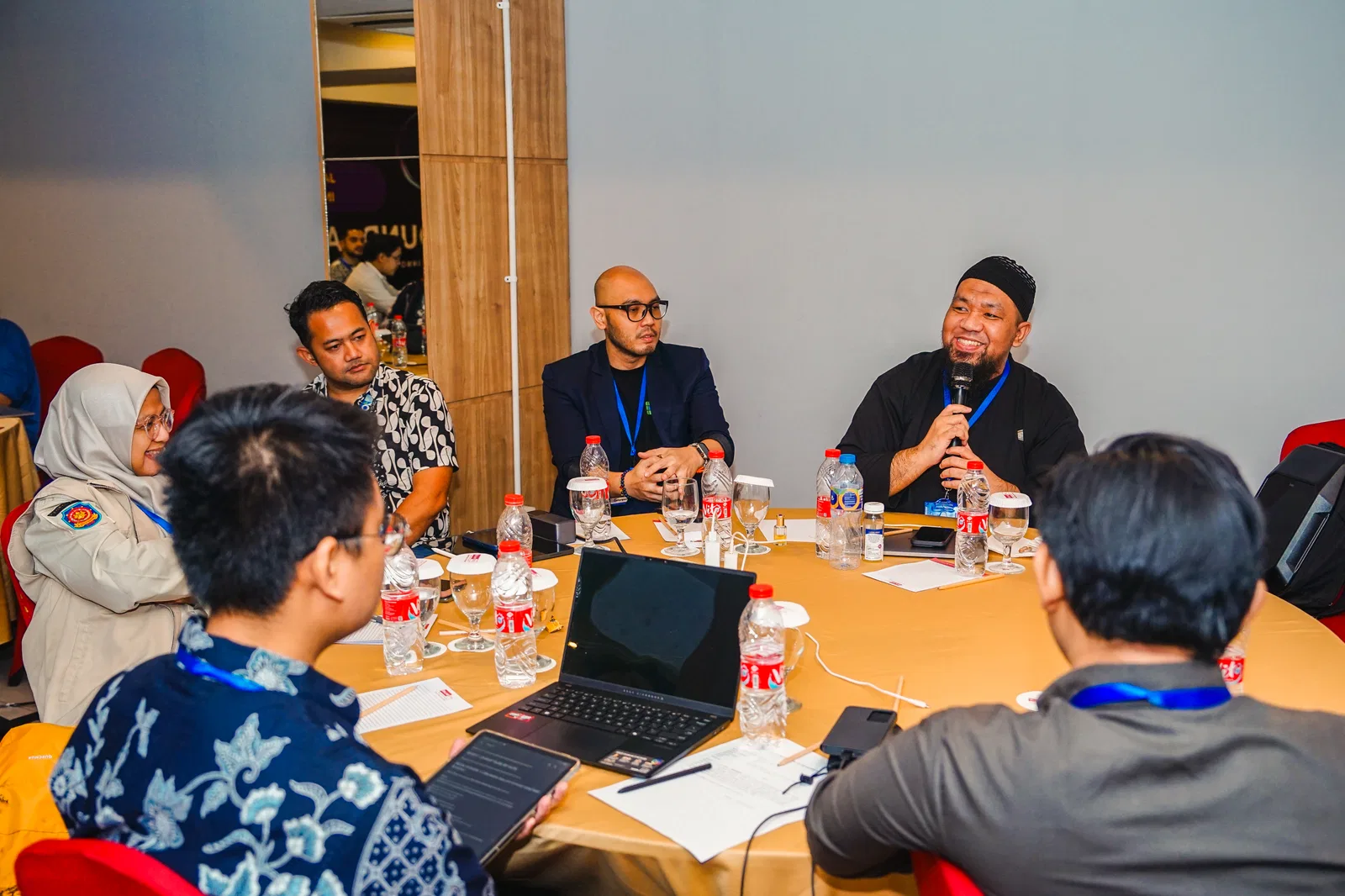
Jakarta, 28 November 2025 — Gurun Nevada, Chief Technology & Product Officer of GeoSquare.ai, joined government agencies, researchers, industry leaders, and startups at the Jakarta Research and Innovation Ecosystem (JRIE) Roundtable Sessions Volume II—a strategic forum initiated by Badan Perencanaan Pembangunan Daerah (Bappeda) DKI Jakarta. The program is designed as a collaborative hub that connects innovators and problem-owners to co-create research-based solutions for Jakarta’s evolving urban challenges.
JRIE hosts a Focus Group Discussion (FGD) for this roundtable as the solution pairing sessions. With the theme “Smart Urban Transformation: Integrating Property, Infrastructure, and Digital Governance”, this initiative helps government agencies like Regional Apparatus Organizations (Organisasi Perangkat Daerah/OPD) and Regionally Owned Enterprises (Badan Usaha Milik Daerah/BUMD) connect with solution providers to explore solutions for the city’s most pressing challenges: multi-modal mobility integration, transit-oriented development (TOD), data governance maturity, and the need for real-time, interoperable city data to enable predictive governance.
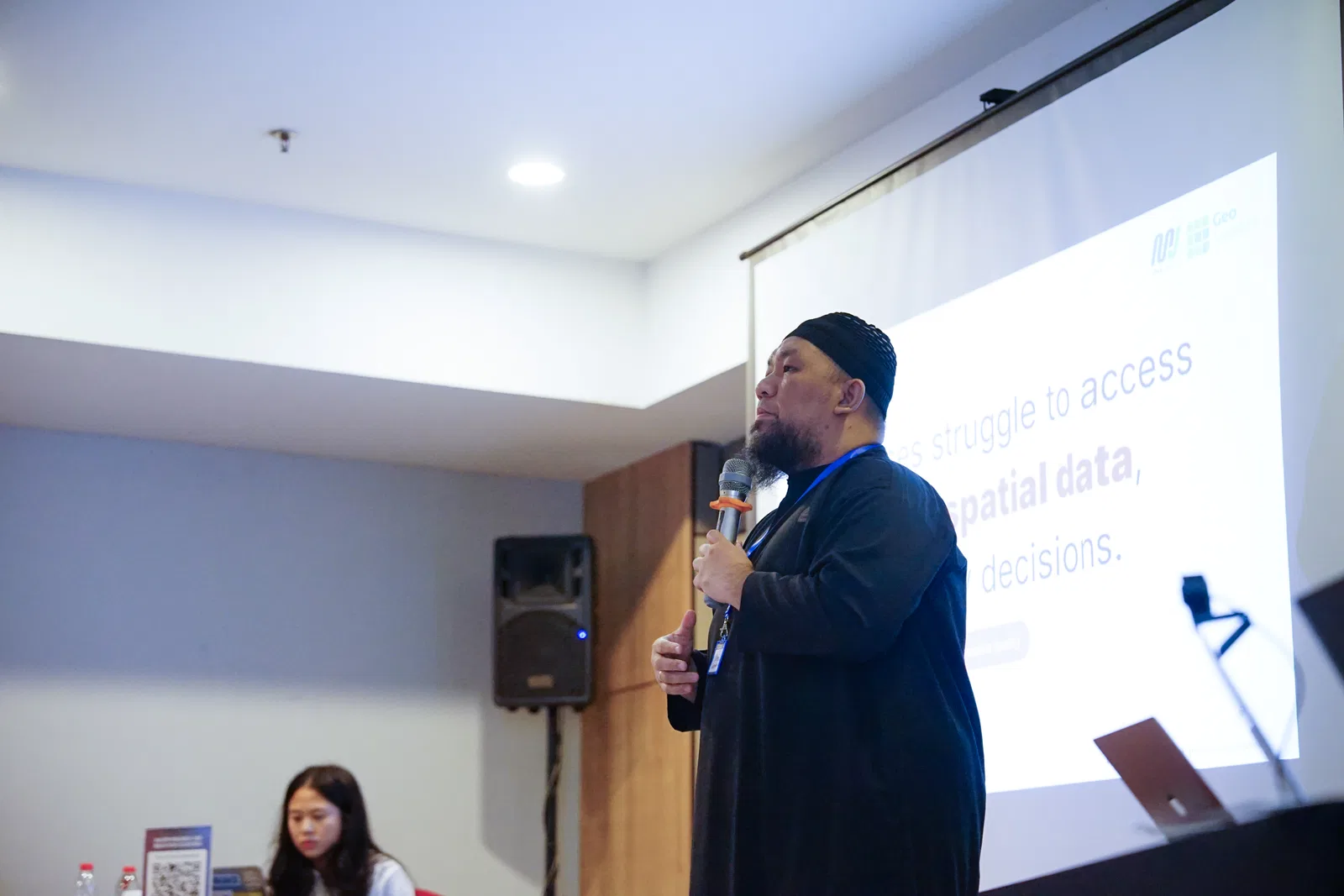
Representing GeoSquare.ai, Nevada delivered a presentation during the startup use-case segment, highlighting that the 50×50-meter grid is a powerful foundation for solving MRT Jakarta’s challenges of integrating mobility patterns and optimizing TOD development.
“Our 50×50-meter grid solution was applied to demonstrate station-level profiles that combine population, mobility flows, and spending behavior,” Nevada explained during the discussion. “On top of that, we also create scoring models that recommend tenant mixes and premium commercial zones, and also micro-scale catchment analyses to target first-last mile interventions”.
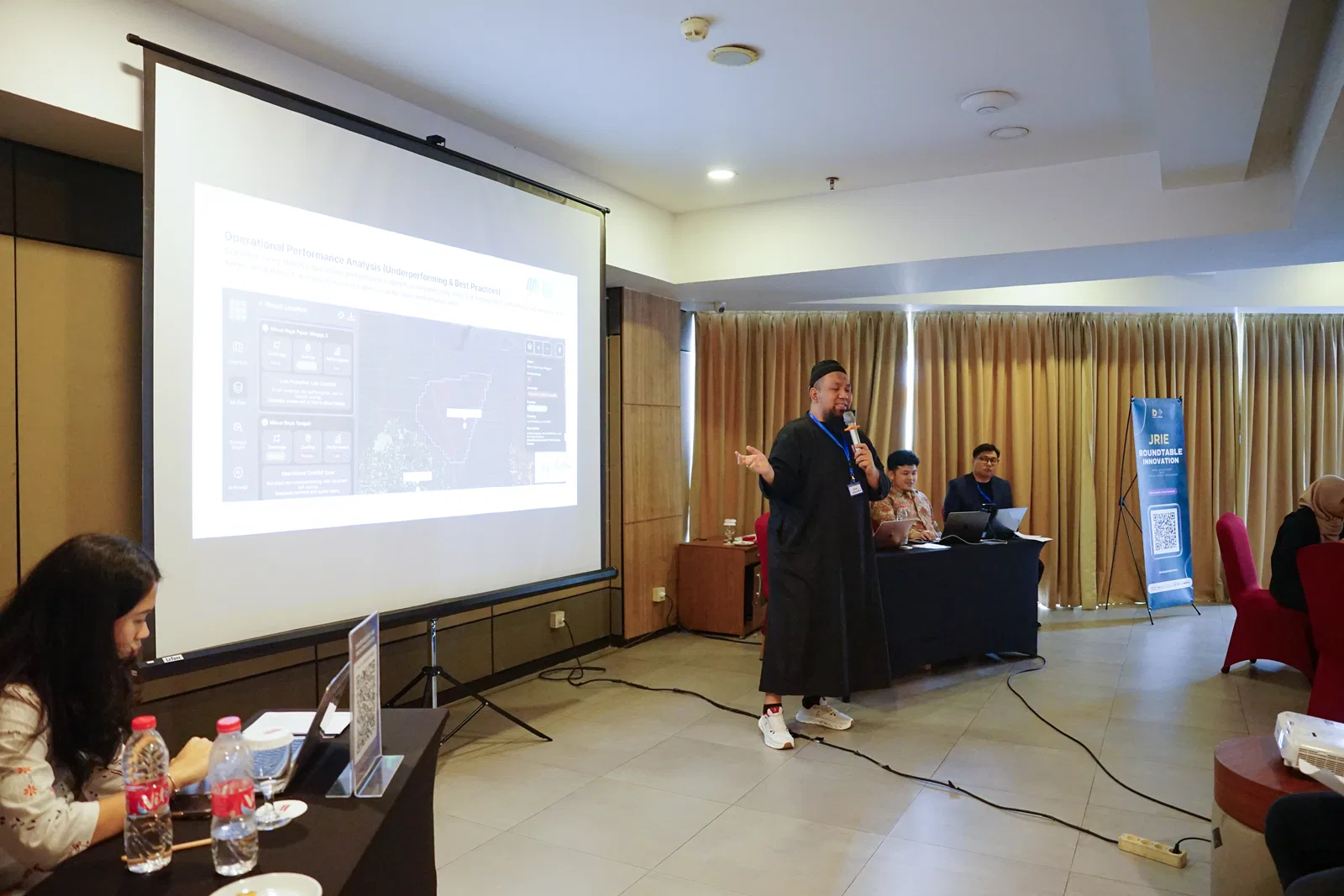
He emphasized how GeoSquare.ai’s granular grid system directly addresses these issues by stitching together scattered datasets into a consistent analytical fabric. This enables government agencies, researchers, and innovators to analyze real conditions at a hyperlocal level—opening opportunities for improved multi-modal integration, stronger TOD planning, and early-stage predictive governance.
Nevada also echoed JRIE’s mission to convert research into implementable projects. With shared data standards, he said, cross-agency teams can build prototypes faster, test solutions more effectively, and scale them with confidence. “Jakarta has no shortage of smart people and bold ideas. What it needs is a common foundation so that all these ideas can connect and grow.”
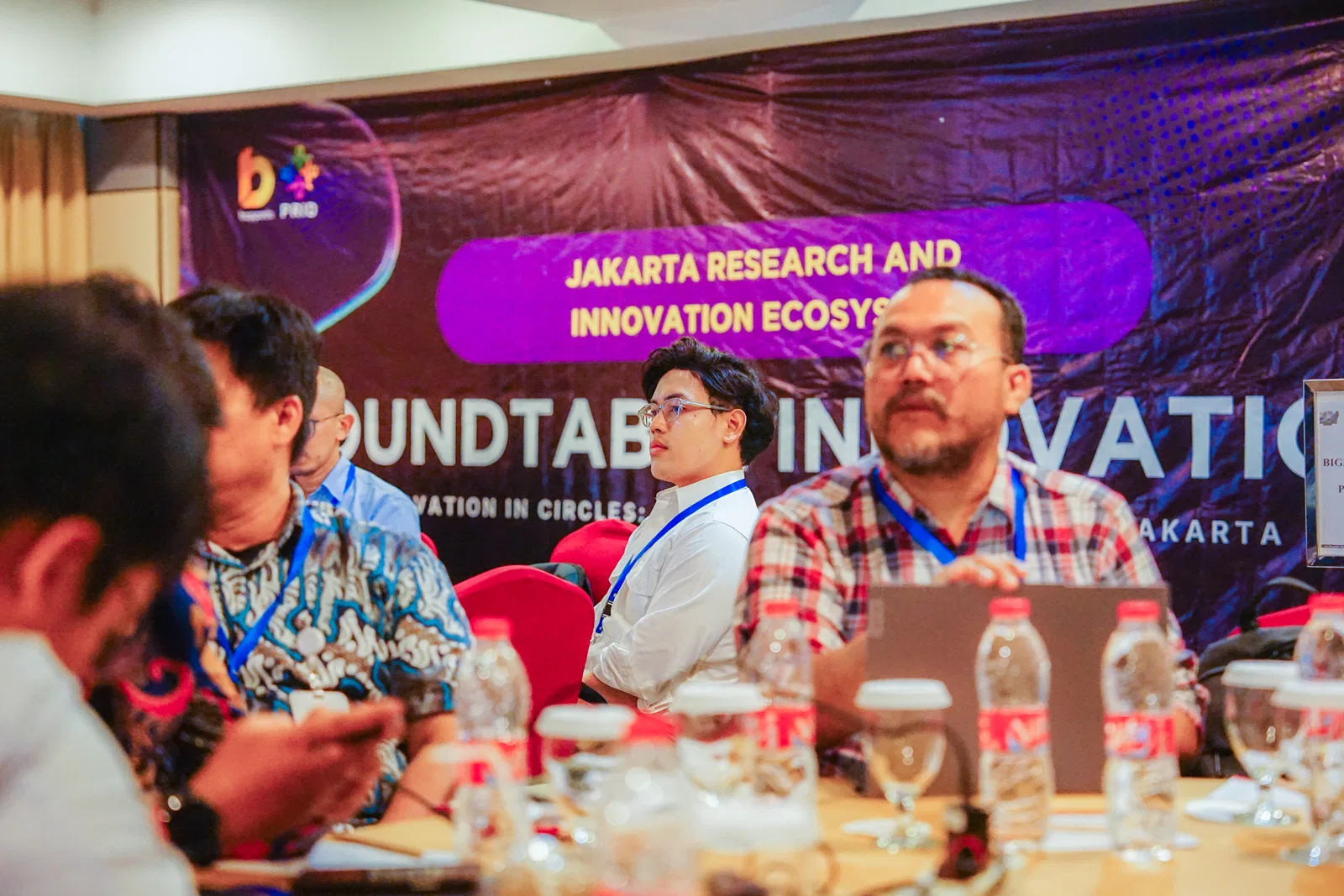
The JRIE Roundtable Vol. II marks another step toward building a collaborative, inclusive, and integrated innovation ecosystem for Jakarta. As the city moves toward its global-city vision, GeoSquare.ai aims to continue supporting government and ecosystem partners with spatial intelligence designed for real-world urban decision-making.